Nobody is perfect. If you think you are perfect, then you are nobody.
We may have heard something along the lines of this statement. I think most—if not all—of us can relate to them, although some may argue that it depends on what “perfect” means or what they mean by it.
The word “perfect” literally means “being entirely without faults, flawless, or complete in every way.” Since we all make mistakes, then it is fair and logical to say that nobody is [going to be] perfect.
In a way, Scripture affirms it by revealing that we all have sinned and fall short of the glory of God (Romans 3:23). This implies that perfection only belongs to God; therefore, in order to be perfect, human must become God—and, of course, this is an impossibility. If humans could ever be perfect, then there would be many Gods; so now, who would be the most perfect one? After all, if we were all perfect, we would not need each other, would we?
If the quality of perfection is measured by the glorious standard of the divine [holy, perfect] being, then no one will ever measure up. In a sense, it is good that nobody is perfect, so humans can stop looking within and around themselves—their weaknesses, brokenness, ugliness, helplessness—and start looking up to the One who is perfect in every way.
This simple truth that “nobody is perfect” means that we, humans, are all equal in God’s sight—regardless of our professions, possessions, knowledge, achievements, networks/connections, relationships, nationalities, and so forth. We should, therefore, treat each other—our fellow human beings—with respect and kindness.
On the other hand, we might be persuaded when people say that nothing is perfect. This might sound true and normal; however, it’s not actually the same as saying that nobody is perfect.
Well, Scripture actually reveals there is one “thing” that is perfect. As it is written, “The Law of the LORD is perfect, restoring the soul; The testimony of the LORD is sure [trustworthy], making wise the simple.” (Psalm 19:7). Perfection does exist!
This means that if only we are able to perfectly obey His law, our whole being is filled with perfection. In reality, however, no one is able to satisfy or live in a complete alignment with His law! Why? Because everyone is a sinner (by nature) and has sinned (by choice), so we are all powerless to completely obey God’s law.
But, here is the good news: Jesus Christ, the Son of God and the Son of Man, is the culmination of the law! He brings righteousness to everyone who believes (Romans 10:4). Hallelujah!
As we believe in Him, Christ is in us and we are in Him. And God has given us His Spirit as proof that we live in Him and He [lives] in us (1 John 4:13). When God sees us, He sees Christ “the perfect law” in us, so we can be sure that we have been made right with God. We can stand blameless before the Almighty—not because of our perfect obedience, but because of the righteousness that Christ has brought to us and produced in us.
This is the only way we can be confident of our salvation: Christ in us—the hope of glory!
Rejecting Christ means rejecting God’s righteousness and His gift of salvation. It is the biggest tragedy in life—and I sincerely wish that no one would have to reject the Savior for all eternity!
But, you may ask, “How can one reject Christ forever?”
I believe the answer goes back to the law. And it’s not without purpose that the first law revealed by God in the Ten Commandments is this: “You shall have no other gods before Me.” (Exodus 20:3).
This law was given to the Israelites through Moses, perhaps over 3,000 years ago, but this holy word is still relevant to us today!
I should ask myself this question, “Is there a god or an idol in my heart besides the One true God?” or “Am I putting my faith, my identity, and my security in something other than God?”
In the ancient times, people built statues of animals to be worshipped as gods. They needed a visible object of their worship and made the statue by their skills and abilities.
Today, are we building something visible that we can look on to and admire? Perhaps, our reputations, titles, trophies, accomplishments, influences, contributions, knowledge, or… our savings?
We feel good when we are able to do this and that, when we contribute to society, when we can travel to new places, when we receive compliments or acknowledgements, when we have saved (or even donated) enough money, when we live comfortably and life seems to be beautiful and promising.
There is nothing wrong with them; after all, all the good things we have and can do in this life are blessings from God.
But, we are not supposed to stop there. We should not stop with the gifts. We should continue in our pursuit of the Giver.
It’s about the affinity and alignment of our hearts to the Person—more than the places, possessions, professions, people, and properties.
The time of testing will come and reveal to us what (or who) is actually in our heart: who has been captivating, possessing, and reigning in our hearts? And the test usually demands something that we value the most to be surrendered to the Lord.
Remember the story of a young and rich man (Matthew 19:16-26) who came to Jesus, asking if there is a good thing he must do to get eternal life. He thought he was already achieving perfection in his own terms, but when Jesus asked him to sell his possessions and give to the poor before he follows Him, he went away sad, because he had great wealth.
The story implies that the young man still chose his wealth over eternal life that can only be found in Jesus. The Bible does not tell us whether he eventually sold his possessions, gave to the poor, and came back to follow Jesus. But, imagine if he did not, which means that he deliberately chose wealth over Wisdom and comfort over Christ. It would be a sad ending.
Jesus then went on and revealed this very important principle to the disciples: “Truly I tell you, it is hard for someone who is rich to enter the kingdom of heaven. Again I tell you, it is easier for a camel to go through the eye of a needle than for someone who is rich to enter the kingdom of God.” (v. 23-24) although He still left a possibility in light of God’s sovereignty, wisdom, love, and power (v. 25-26).
Contrast this with His teaching (Sermon on the Mount), which is known as the Beatitudes, where the first thing He revealed was “Blessed are the poor in spirit, for theirs is the kingdom of heaven” (Matthew 5:3-11). This, of course, does not mean that Christians need to be financially poor to be able to live in humility and earn God’s favor. But it means that we need to live in sincere and faithful dependence on God, relying on Him through active prayers, worship, and meditation of His Word, and putting our identity and security in Christ—our Lord and Master—alone rather than in the [fleeting] riches and pleasures of this world.
Being poor in spirit means realizing in full agreement that apart from Jesus we can do nothing (John 15:5).
On the previous occasions, Jesus taught the disciples this powerful lesson: “No one can serve two masters. For you will hate one and love the other; you will be devoted to one and despise the other. You cannot serve God and be enslaved to money.” (Matthew 6:24) and He asked them one of the most important questions in everyone’s life: “For what will it profit a man if he gains the whole world and forfeits his soul? Or what shall a man give in return for his soul?” (Matthew 16:26).
All these remind and challenge us that we are to have only Jesus in our heart—no other gods before Him—if we have really accepted Him, with the wholehearted commitment to follow Him.
No ambitions, agendas, accolades, nor achievements that we can boast about. Scripture reveals that those who wish to boast should boast in this alone: that they truly know God and understand that He is the LORD who demonstrates unfailing love and who brings justice and righteousness to the earth, and that He delights in these things (Jeremiah 9:24).
In our personal relationship with God, we are called to know Him—His nature, character, attributes (who He is) and His works (what He does). He is the LORD and He works to show His unfailing love and bring justice and righteousness to the earth. God delights when we grow in our knowledge and understanding of Him as well as when His attributes—love, justice, and righteousness—are lived and manifested over all the earth.
In my relationship with others, I cannot say that I truly love someone if I don’t know him/her personally and what makes him/her pleased. The same should be true for our relationship with God.
There is POWER in knowing God. This is why the LORD repeatedly said these words: “By this you shall KNOW that I am the LORD” or “so that you may KNOW that there is no one like the LORD our God” when He sent His judgment to Pharaoh and the Egyptians (Exodus 7-12).
Jesus reveals the power of knowing truth that will set us free from the bondage of sin: “And you will know the truth, and the truth will set you free.” (John 8:32).
As believers in Christ, know that we have this wonderful promise that the God of peace will preserve our whole spirit, soul, and body blameless at the coming of the Prince of peace, as it is written, “May the God of peace make you holy in every way, and may your whole spirit and soul and body be kept blameless until our Lord Jesus Christ comes again. God will make this happen, for He who calls you is faithful.” (1 Thessalonians 5:23-24). Our holiness (sanctification) is only possible because of the faithfulness of our Lord Jesus Christ.
In the time of testing and refining, may we KNOW the LORD is the One true God.
Sometimes God allows failures and disappointments to happen in our lives, so that we can personally meet and know Him. When we no longer can hold on to anything that we used to rely on, we will encounter God and experience His love [mercy and grace] and power [miracle and strength]. Jesus meets us in the valleys where our eyes are open to recognize Him. No wonder Paul can most gladly say he will rather glory in his infirmities that the power of Christ may rest upon him (2 Corinthians 12:9).
We may have learned that failures or sufferings can be a better “teacher” than successes. They can shape our characters—patience, perseverance, humility, faith, unselfishness—better than successes can do. However, far more important than characters, I believe failures or sufferings will ultimately be meaningful if they bring us to Christ.
This world is not our home. We are not meant to “settle” here. We are not supposed to live and remain in our comfort zones. We are called to seek first God’s kingdom and His righteousness, and trust in His ability to supply all our needs (Matthew 6:33).
God’s call for us to have no other gods before Him is actually a divine guide for us to live a simple, focused life that is devoted to Him. As we abide in His Word, we will bear fruit. Our faithfulness and fruitfulness matter to God.
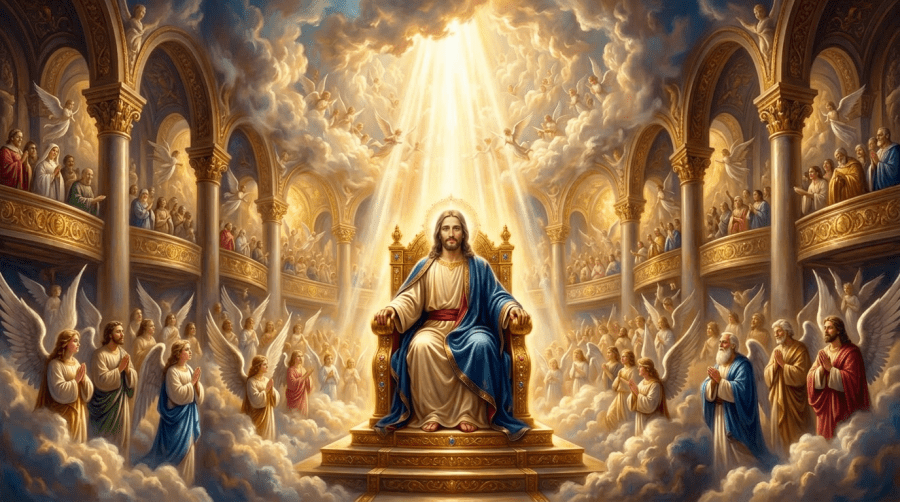
To live a faithful and fruitful life, we must not let the cares of this world, the deceitfulness of riches, and the desires for things distract and drag us away from the Lord. We must not have any other gods in our heart. Let Christ be the only King who sits and reigns on the throne, because He alone is worthy of power, wealth, wisdom, strength, honor, glory, and praise!
This article was originally written on June 30, 2026 and updated on July 3, 2026 in Port Coquitlam, BC, Canada. The featured image was generated with AI.
 Pearls of Mind